





|
Forwardcharm |
 |

Latest News 26 / 02 / 2023 20 / 11 / 2022 13 / 11 / 2022 30 / 10 / 2022 23 / 10 / 2022 09 / 10 / 2022 02 / 10 / 2022 I've slightly changed the weightings of Alfa/Alpine/Haas to reflect their current performance. 11 / 09 / 2022 04 / 09 / 2022 28 / 08 / 2022 31 / 07 / 2022 24 / 07 / 2022 10 / 07 / 2022 You can still enter a new team even if you missed all the previous races - you'll get a late starter bonus to help you get going. 03 / 07 / 2022 You can still enter a new team even if you missed all the previous races - you'll get a late starter bonus to help you get going. 20 / 06 / 2022 You can still enter a new team even if you missed all the previous races - you'll get a late starter bonus to help you get going. 12 / 06 / 2022 You can still enter a new team even if you missed all the previous races - you'll get a late starter bonus to help you get going. I've slightly increased the weightings of the Mercedes pair as their woes seem to be continuing. 29 / 05 / 2022 You can still enter a new team even if you missed all the previous races - you'll get a late starter bonus to help you get going. 22 / 05 / 2022 You can still enter a new team even if you missed all the previous races - you'll get a late starter bonus to help you get going. 10 / 05 / 2022 24 / 04 / 2022 I've slightly reduced the weightings of Norris / McLaren because they're doing particularly well at the moment. 10 / 04 / 2022 27 / 03 / 2022 I decided not to change the weightings again for now. Let's see how the next couple of races go. 20 / 03 / 2022 I have made some quick changes to the weightings - Haas seem much stronger than I expected and McLaren/Aston much weaker. I might tweak them again after Saudi. 13 / 03 / 2022 12 / 12 / 2021 05 / 12 / 2021 21 / 11 / 2021 You can still enter a new team even if you missed all the previous races - you'll get a late starter bonus to help you get going. 14 / 11 / 2021 You can still enter a new team even if you missed all the previous races - you'll get a late starter bonus to help you get going. 07 / 11 / 2021 You can still enter a new team even if you missed all the previous races - you'll get a late starter bonus to help you get going. 24 / 10 / 2021 You can still enter a new team even if you missed all the previous races - you'll get a late starter bonus to help you get going. 26 / 09 / 2021 You can still enter a new team even if you missed all the previous races - you'll get a late starter bonus to help you get going. 26 / 09 / 2021 You can still enter a new team even if you missed all the previous races - you'll get a late starter bonus to help you get going. 12 / 09 / 2021 You can still enter a new team even if you missed all the previous races - you'll get a late starter bonus to help you get going. 05 / 09 / 2021 You can still enter a new team even if you missed all the previous races - you'll get a late starter bonus to help you get going. 29 / 08 / 2021 You can still enter a new team even if you missed all the previous races - you'll get a late starter bonus to help you get going. 01 / 08 / 2021 You can still enter a new team even if you missed all the previous races - you'll get a late starter bonus to help you get going. 18 / 07 / 2021 You can still enter a new team even if you missed all the previous races - you'll get a late starter bonus to help you get going. 15 / 07 / 2021 04 / 07 / 2021 You can still enter a new team even if you missed all the previous races - you'll get a late starter bonus to help you get going. 27 / 06 / 2021 You can still enter a new team even if you missed all the previous races - you'll get a late starter bonus to help you get going. 20 / 06 / 2021 You can still enter a new team even if you missed all the previous races - you'll get a late starter bonus to help you get going. 06 / 06 / 2021 You can still enter a new team even if you missed all the previous races - you'll get a late starter bonus to help you get going. 23 / 05 / 2021 You can still enter a new team even if you missed all the previous races - you'll get a late starter bonus to help you get going. 09 / 05 / 2021 You can still enter a new team even if you missed all the previous races - you'll get a late starter bonus to help you get going. 02 / 05 / 2021 You can still enter a new team even if you missed the first three races - you'll get a late starter bonus to help you get going. 18 / 04 / 2021 You can still enter a new team even if you missed the first two races - you'll get a late starter bonus to help you get going. The weightings for Alpine have increased because they've been a bit shit. 28 / 03 / 2021 You can still enter a new team even if you missed the first race - you'll get a late starter bonus to help you get going. 21 / 03 / 2021
|

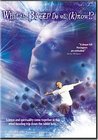
What the Bleep Do We Know?
This is going to be a tricky review to write, and I think it's going to be a long one. What the Bleep Do We Know? is a feature-length documentary about some recent quantum mechanical theories and the ramifications they could have on human consciousness and experience. It has already polarised opinion and been a surprise hit in the USA while also attracting fierce criticism, now it's my turn to try and help you decide whether you want to see it or not.
The story aspect follows deaf woman Amanda, played by deaf actress Marlee Matlin, as she has a peculiar day that conveniently demonstrates the topics being discussed. The story is not important, but the film-makers seemed to forget that as it takes over towards the end. An hour into the film, there is a 15 minute sequence that takes place at a wedding, which is excruciating in its amateur acting and pointlessness - it reminded me of the "educational" films we had to watch at school. We're watching this movie to listen to the experts, not to watch fifth rate actors dancing to Robert Palmer. The computer graphics are quite entertaining, but the live action is difficult to watch during this scene as it is far too long and simply gets in the way. I also completely failed to understand the deafness aspect. Amanda is clearly deaf, as her best friend uses sign language to talk to her and she has the voice of one who has never heard herself talk - yet her friend gets her attention by banging on the floor or wall, Amanda is distracted by a noisy commotion in a railway station, her boss leaves a message on her answering machine and she dances to music. So what are they trying to tell us? She's deaf but she's not deaf? Am I missing an important point or is this simply a gaping hole?
|
||
Your commentsThe comments printed here are not necessarily the views of Forwardcharm!
Not having a great education in the sciences this film started to have the same effect on me as Professor Hawkins book "A Brief History of Time" I was totally lost and realised that I needed to concentrate, unlike Hawkins book I was then able to follow some of the discussions.
Dear Mr Ms Forwardcharm, Thanks for this review. I had vaguely heard about the film and a friend asked me if I wanted to go to see it. My friend is into energy spirituality etc, whereas I am a sceptic who gets annoyed when scientific concepts are grossly misapplied by chiffon-wearing nutjobs, who haven't the decency to explain that they are speaking speculatively and that they are pushing an agenda (viz the fact that many involved in making this film are Ramtha flag-wavers who are apparently too embarrassed dishonest to explain the relationship between J Z Knight and Ramtha).
You're very welcome Rachel, thanks for contributing.
The Dr. Quantum portions of the movie are factaully accurate and very well done. The rest is new-age religious stuff, which is somewhat interesting. The Ramtha lady almsot ruins the movie and she sticks out like a sire thumb. If Fred Allan Wolf did the whole movie himself, with the aid of his cartoon character, Dr. Quantum, it would be a must see. The Marlee matlin portions are terribly low quality, uninteresting and worth going to the bathroom during.
I know I'm a bit late to the party on this one, but I've just watched this choad and felt compelled to comment. I was hoping that it wouldn't be the usual bunch of superficial spiritual rubbish, but, alas it was.
| ||
 The movie threads together several knowledgeable talking heads from the worlds of science and mysticism with a fictitious
day in the life of a woman, whose experiences help us to understand the points made by the experts. Normally I wouldn't
go into the details of what happens, but I'm going to make an exception here because a little advance knowledge will,
I think, improve the experience. I'm also not going to rate the movie, because to do so would give a false impression -
you're just going to have to read it all I'm afraid.
The movie threads together several knowledgeable talking heads from the worlds of science and mysticism with a fictitious
day in the life of a woman, whose experiences help us to understand the points made by the experts. Normally I wouldn't
go into the details of what happens, but I'm going to make an exception here because a little advance knowledge will,
I think, improve the experience. I'm also not going to rate the movie, because to do so would give a false impression -
you're just going to have to read it all I'm afraid.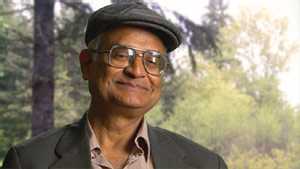 Leaving the rather limp story aside, the essence behind the movie is that at a quantum, subatomic level, matter
doesn't exist in the traditional sense -
it exists as a cloud of possibilities, and it changes its nature when it's observed. That's a mighty tricky concept to
believe on the face of it, for instance, how do we know what it's like when it's not being observed? This is a
question that quantum experiments can answer, but it's not addressed here. Heisenberg's Uncertainty Principle, as it's
called (broadly speaking), is a
universally accepted scientific principle so OK, we'll accept it too and see where it goes. The fact that the actions of
an observer can change the thing that's being observed opens up a whole realm of interesting possibilities and the experts
all talk in their respective fields and raise their appropriate points. It's not until the end that we find out which of
the experts are scientists and which are mystics - though to be fair it's not that difficult to tell. One woman in
particular seemed to be talking with a great sense of authority, but for the life of me I couldn't pick out a single point
in what she was saying. "Have you ever seen yourself through the eyes of someone else that you have become?" she says,
as if it's the most insightful comment ever made. Come again? Once more in something approaching English please.
She talks like a politician inasmuch as she had nothing salient to say whatsoever, but used a hell of a
lot of words to say it. Her name was Ramtha (no surname) and we'll return to her later. With such a range
of speakers, it's not surprising that some of what they say is clearly true, other things are clearly nonsense, and most
of it is somewhere in between. All of it is interesting and considering the breadth of expertise, surprisingly consistent.
Leaving the rather limp story aside, the essence behind the movie is that at a quantum, subatomic level, matter
doesn't exist in the traditional sense -
it exists as a cloud of possibilities, and it changes its nature when it's observed. That's a mighty tricky concept to
believe on the face of it, for instance, how do we know what it's like when it's not being observed? This is a
question that quantum experiments can answer, but it's not addressed here. Heisenberg's Uncertainty Principle, as it's
called (broadly speaking), is a
universally accepted scientific principle so OK, we'll accept it too and see where it goes. The fact that the actions of
an observer can change the thing that's being observed opens up a whole realm of interesting possibilities and the experts
all talk in their respective fields and raise their appropriate points. It's not until the end that we find out which of
the experts are scientists and which are mystics - though to be fair it's not that difficult to tell. One woman in
particular seemed to be talking with a great sense of authority, but for the life of me I couldn't pick out a single point
in what she was saying. "Have you ever seen yourself through the eyes of someone else that you have become?" she says,
as if it's the most insightful comment ever made. Come again? Once more in something approaching English please.
She talks like a politician inasmuch as she had nothing salient to say whatsoever, but used a hell of a
lot of words to say it. Her name was Ramtha (no surname) and we'll return to her later. With such a range
of speakers, it's not surprising that some of what they say is clearly true, other things are clearly nonsense, and most
of it is somewhere in between. All of it is interesting and considering the breadth of expertise, surprisingly consistent. Let's talk specifics. An experiment conducted on water from the Fujiwara Dam in Japan showed that water that had been
blessed by a Zen Buddhist monk changed its molecular structure (at least, that's what they said - presumably that means
the way the molecules group together rather than the H2O molecule itself changing structure).
Moreover, simply taping different words to a bottle containing distilled water also changed the molecular structure.
Pretty stunning results, you'd have to agree. Presumably this
experiment is repeatable, so if it's genuine, surely we should be pumping money into researching stuff like this,
rather than funding a space programme. Does the scientific community really ignore results like this just because they
seem too unlikely, when they're so easily proved or disproved? I'd like to think not, but I really don't know. It's
this uncertainty that makes films like this intriguing, but at the same time casts a doubt over the authenticity.
A second reference is about an experiment in Washington DC where a group of 4000 meditators tried to reduce the violent crime
rate in Washington over a two month period by simply meditating on it. Allegedly the crime rate dropped over the period
and ended up 24% down in the final week of the study. This experiment is documented elsewhere so I have to assume it's
genuine, but there is argument about whether the results are statistically significant. Clearly the meditators believe
it is - so why not set up a No-Drop-No-Fee system for the Washington Police? I'm sure they'd pay to reduce crime - and if
it turned out to be a coincidence that the first study worked, it wouldn't cost them anything. It troubles me when there
are obvious ways forward like this that haven't been carried out, they make me doubt the accuracy of the experiments in the
first place. And there's more doubt to come.
Let's talk specifics. An experiment conducted on water from the Fujiwara Dam in Japan showed that water that had been
blessed by a Zen Buddhist monk changed its molecular structure (at least, that's what they said - presumably that means
the way the molecules group together rather than the H2O molecule itself changing structure).
Moreover, simply taping different words to a bottle containing distilled water also changed the molecular structure.
Pretty stunning results, you'd have to agree. Presumably this
experiment is repeatable, so if it's genuine, surely we should be pumping money into researching stuff like this,
rather than funding a space programme. Does the scientific community really ignore results like this just because they
seem too unlikely, when they're so easily proved or disproved? I'd like to think not, but I really don't know. It's
this uncertainty that makes films like this intriguing, but at the same time casts a doubt over the authenticity.
A second reference is about an experiment in Washington DC where a group of 4000 meditators tried to reduce the violent crime
rate in Washington over a two month period by simply meditating on it. Allegedly the crime rate dropped over the period
and ended up 24% down in the final week of the study. This experiment is documented elsewhere so I have to assume it's
genuine, but there is argument about whether the results are statistically significant. Clearly the meditators believe
it is - so why not set up a No-Drop-No-Fee system for the Washington Police? I'm sure they'd pay to reduce crime - and if
it turned out to be a coincidence that the first study worked, it wouldn't cost them anything. It troubles me when there
are obvious ways forward like this that haven't been carried out, they make me doubt the accuracy of the experiments in the
first place. And there's more doubt to come. One of the most exciting potentials of consciousness affecting matter is the possibility of being able to influence your
own reality. The snippet that caught my imagination was by Dr Joe Dispenza, who claimed that he woke up every morning
and "created his day". Throughout the day, little things would happen to make his day unfold as he had created it.
It struck me as odd that he didn't say how he did it, so I did a little research afterwards to see if I could
find out. It turns out that I'm not the only one, apparently this question is very frequently asked and that this
particular scene is the most memorable for most people. I was a little perplexed to find that the answer wasn't available
despite the question having been asked by thousands of viewers. I was a little surprised to find that Dr Joe Dispenza is
a student of ... oh my God ... Ramtha - that pompous woman who talked like a politician. And when I started reading about
Ramtha,
it turns out that - and you're not going to believe this, I swear I'm not making this up - Ramtha is a 35,000 year old
warrior man who uses this woman (who is really called J Z Knight) as a channel to teach "about the mystery of mind over
matter". Funny how they chose not to mention that in the movie, isn't it? Maybe they thought that it would lose her
credibility (perish the thought). Oh, and hang on, look at this! All three of the filmmakers -
William Arntz, Betsy Chasse and Mark Vicente - are also card-carrying students of Ramtha's "school of enlightenment".
Oh and here we go, Ramtha has a DVD out explaining how to "create your day". That explains everything.
One of the most exciting potentials of consciousness affecting matter is the possibility of being able to influence your
own reality. The snippet that caught my imagination was by Dr Joe Dispenza, who claimed that he woke up every morning
and "created his day". Throughout the day, little things would happen to make his day unfold as he had created it.
It struck me as odd that he didn't say how he did it, so I did a little research afterwards to see if I could
find out. It turns out that I'm not the only one, apparently this question is very frequently asked and that this
particular scene is the most memorable for most people. I was a little perplexed to find that the answer wasn't available
despite the question having been asked by thousands of viewers. I was a little surprised to find that Dr Joe Dispenza is
a student of ... oh my God ... Ramtha - that pompous woman who talked like a politician. And when I started reading about
Ramtha,
it turns out that - and you're not going to believe this, I swear I'm not making this up - Ramtha is a 35,000 year old
warrior man who uses this woman (who is really called J Z Knight) as a channel to teach "about the mystery of mind over
matter". Funny how they chose not to mention that in the movie, isn't it? Maybe they thought that it would lose her
credibility (perish the thought). Oh, and hang on, look at this! All three of the filmmakers -
William Arntz, Betsy Chasse and Mark Vicente - are also card-carrying students of Ramtha's "school of enlightenment".
Oh and here we go, Ramtha has a DVD out explaining how to "create your day". That explains everything.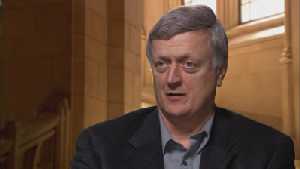 I've started to get angry now and that probably means I'm not thinking clearly. I must remember,
sometimes even nutters have valid things to say, even if it's by accident.
It would have helped enormously though, if they could have talked through some examples. Surely if you can create
your day then it would be simplicity itself to show us an example to make it vaguely believable. This argument is even
more severely levelled at Dr Miceal Ledwith who, after saying lots of sensible and interesting things, throws in the
snippet with David Icke-like sincerity, "if you accept with every rudiment of your being that you will walk on water,
will it happen? Yes it will!" Riiiight. So if you
walk off the edge of a cliff without realising it's the edge of a cliff, you'll hang in the air ... what a load of
bollocks. Show me. This is the movie's real problem - we so desperately want to believe these things that we'll accept
Dr Joe Dispenza's claims (Dr Dispenza is, by the way, a chiropractic doctor, not a neurological one) even though upon
further investigation they seem more likely to be money-making scams.
I've started to get angry now and that probably means I'm not thinking clearly. I must remember,
sometimes even nutters have valid things to say, even if it's by accident.
It would have helped enormously though, if they could have talked through some examples. Surely if you can create
your day then it would be simplicity itself to show us an example to make it vaguely believable. This argument is even
more severely levelled at Dr Miceal Ledwith who, after saying lots of sensible and interesting things, throws in the
snippet with David Icke-like sincerity, "if you accept with every rudiment of your being that you will walk on water,
will it happen? Yes it will!" Riiiight. So if you
walk off the edge of a cliff without realising it's the edge of a cliff, you'll hang in the air ... what a load of
bollocks. Show me. This is the movie's real problem - we so desperately want to believe these things that we'll accept
Dr Joe Dispenza's claims (Dr Dispenza is, by the way, a chiropractic doctor, not a neurological one) even though upon
further investigation they seem more likely to be money-making scams. So I'm having a lot of trouble believing much of what they're showing us here. But that doesn't mean it's
not true (not believing something is a long way from believing it's false), and even if it's all nonsense, it's still
interesting. To be fair, the filmmakers are not telling us, "this is how things are," they are merely throwing ideas at
us - and as such it is inspirational, as it made me think. A lot. It would just be a whole lot better without that
fruitbat claiming to be Ramtha, who has become very rich from doing that, by the way. Her (his?) very presence
by association sullies the testimony of the pukka scientists, who are extremely eloquent and make some astounding and
fascinating observations about the mysterious and wonderful world of quantum mechanics, while exhibiting the
infectious and child-like joyous enthusiasm that can only be obtained by those who really love to discover how the
world works. Not that their enthusiasm or scientific credentials mean they're any more likely to be correct - but
it does at least convince me that they're on the level.
So I'm having a lot of trouble believing much of what they're showing us here. But that doesn't mean it's
not true (not believing something is a long way from believing it's false), and even if it's all nonsense, it's still
interesting. To be fair, the filmmakers are not telling us, "this is how things are," they are merely throwing ideas at
us - and as such it is inspirational, as it made me think. A lot. It would just be a whole lot better without that
fruitbat claiming to be Ramtha, who has become very rich from doing that, by the way. Her (his?) very presence
by association sullies the testimony of the pukka scientists, who are extremely eloquent and make some astounding and
fascinating observations about the mysterious and wonderful world of quantum mechanics, while exhibiting the
infectious and child-like joyous enthusiasm that can only be obtained by those who really love to discover how the
world works. Not that their enthusiasm or scientific credentials mean they're any more likely to be correct - but
it does at least convince me that they're on the level.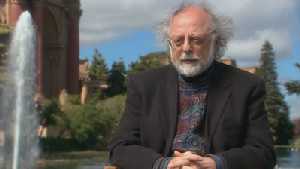 I'm in two minds here. On one hand, I don't want to recommend What the Bleep Do We Know, because of the
suspicious nature of some of the content. On the other hand, however, it's a very thought-provoking movie, and anything
that encourages people to think about life and that brings the wonders of the mind into popular culture has to be applauded.
It feels like the right time to have a revolution in our understanding of how the mind works and I think this is why it
has caught the public's imagination. The comments made by viewers on sites such as Amazon and
IMDB contain an awful lot of "I don't believe so-and-so therefore the movie is a load of crap" comments, and everyone seems
to be giving it either the maximum or minimum ratings - nothing in between. This is a surefire sign that people are finding
the content uncomfortable, that it's challenging their beliefs. Most people don't like having their beliefs challenged,
so they will try and find something to discredit so they can be comfortable with their own current map of reality.
To a certain extent, I've fallen into that exact same trap with my ramblings above. However, the fact that it's made
me think about these issues enough to be able to form my own opinions means that the movie has worked, and as such I am
going to recommend it after all, as long as you can be open minded enough to think it all through and be OK with the
fact that we can all be completely wrong about anything and everything.
After all, what the #$*! do we know?
I'm in two minds here. On one hand, I don't want to recommend What the Bleep Do We Know, because of the
suspicious nature of some of the content. On the other hand, however, it's a very thought-provoking movie, and anything
that encourages people to think about life and that brings the wonders of the mind into popular culture has to be applauded.
It feels like the right time to have a revolution in our understanding of how the mind works and I think this is why it
has caught the public's imagination. The comments made by viewers on sites such as Amazon and
IMDB contain an awful lot of "I don't believe so-and-so therefore the movie is a load of crap" comments, and everyone seems
to be giving it either the maximum or minimum ratings - nothing in between. This is a surefire sign that people are finding
the content uncomfortable, that it's challenging their beliefs. Most people don't like having their beliefs challenged,
so they will try and find something to discredit so they can be comfortable with their own current map of reality.
To a certain extent, I've fallen into that exact same trap with my ramblings above. However, the fact that it's made
me think about these issues enough to be able to form my own opinions means that the movie has worked, and as such I am
going to recommend it after all, as long as you can be open minded enough to think it all through and be OK with the
fact that we can all be completely wrong about anything and everything.
After all, what the #$*! do we know?

